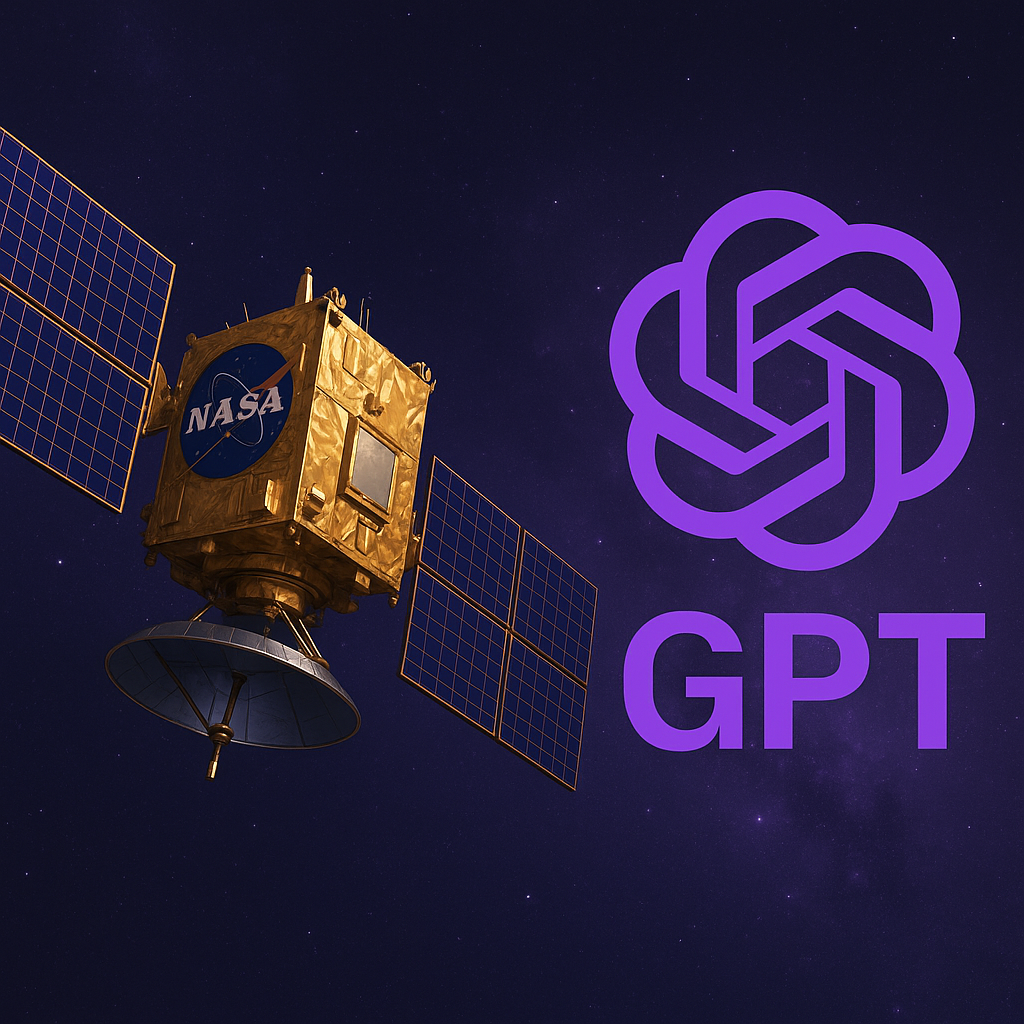
NASA’s new Dynamic Targeting AI enables satellites to think on their own—scanning ahead, avoiding clouds, and capturing only useful Earth images in under 90 seconds.
A Smarter Satellite
NASA is testing a new way to make satellites smarter. The system is called Dynamic Targeting AI. It lets satellites decide when and what to photograph without waiting for commands from Earth.
This new feature was tested on CogniSAT-6, a small CubeSat launched in 2024. For the first time, a satellite can scan ahead, check the sky, and capture useful images in real time.
How It Works
Dynamic Targeting AI changes the way satellites take pictures. Instead of capturing images blindly, the satellite “looks ahead.”
- Step 1: Preview – The satellite tilts forward and takes a quick image of the area it will soon pass.
- Step 2: AI Check – The onboard AI reviews the preview. If there are clouds, it marks the area as blocked.
- Step 3: Decision – If the sky is clear, the satellite takes the photo. If not, it saves time and storage by skipping it.
The full process takes less than 90 seconds, even as the satellite orbits Earth at nearly 17,000 mph.
Why It Matters
Traditional satellites often waste time and energy by taking images covered with clouds. Experts say as much as two-thirds of satellite images are unusable.
Dynamic Targeting AI helps solve this problem. It means:
- Better data – More clear images for scientists.
- Faster response – Useful during natural disasters like floods, fires, or storms.
- Lower costs – Less wasted storage and fewer bad transmissions.
What Comes Next
NASA is not stopping here. Future versions of this AI will do more than just avoid clouds. The next step is to teach satellites to look for events, such as wildfires, volcanic eruptions, or hurricanes.
NASA also plans to use AI with satellite constellations. This would let several satellites work together, following the same event from different angles in real time.
A Turning Point for Space
NASA has used AI in space before, but Dynamic Targeting is different. It makes satellites more than tools—they become active decision-makers.
By teaching satellites to see, think, and act, NASA is changing how we watch Earth from space. The result will be smarter, faster, and more efficient data for science and safety.